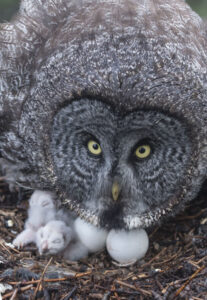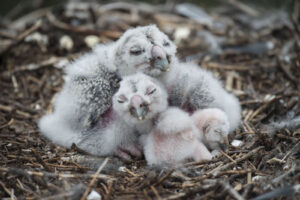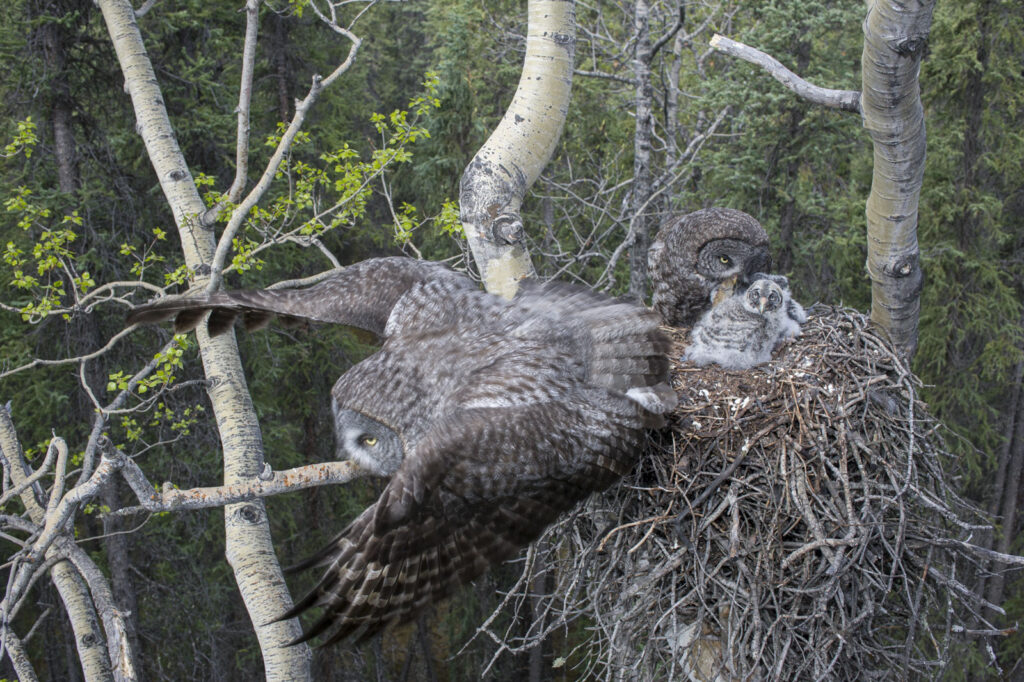
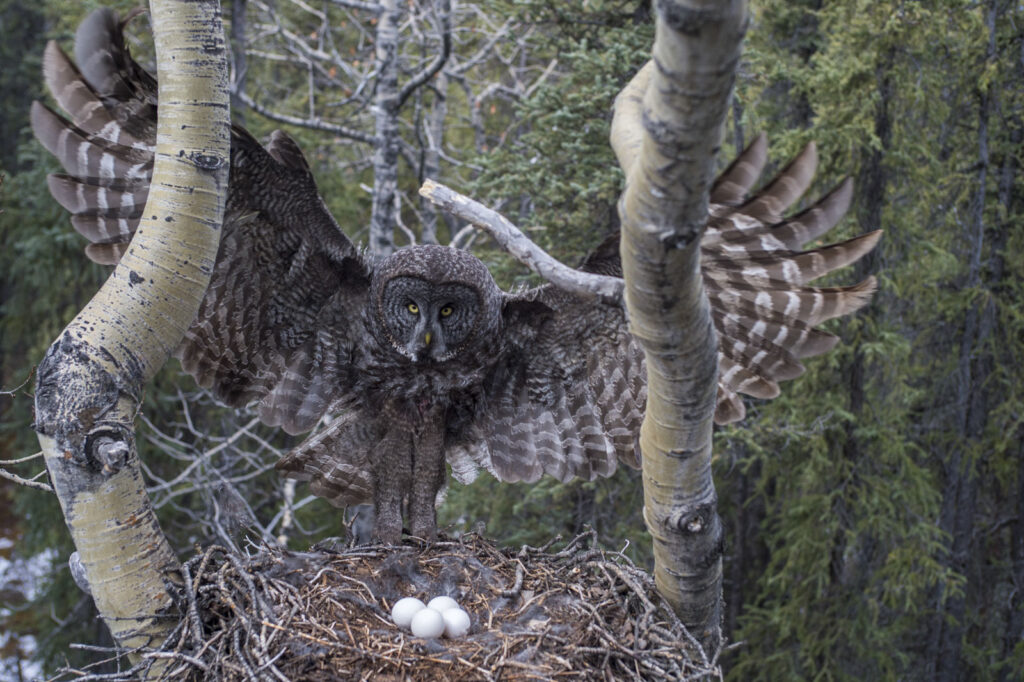
The female great gray owl (Strix nebulosa) returns to her nest in the Alaskan forest. The female will incubate the eggs for thirty days.
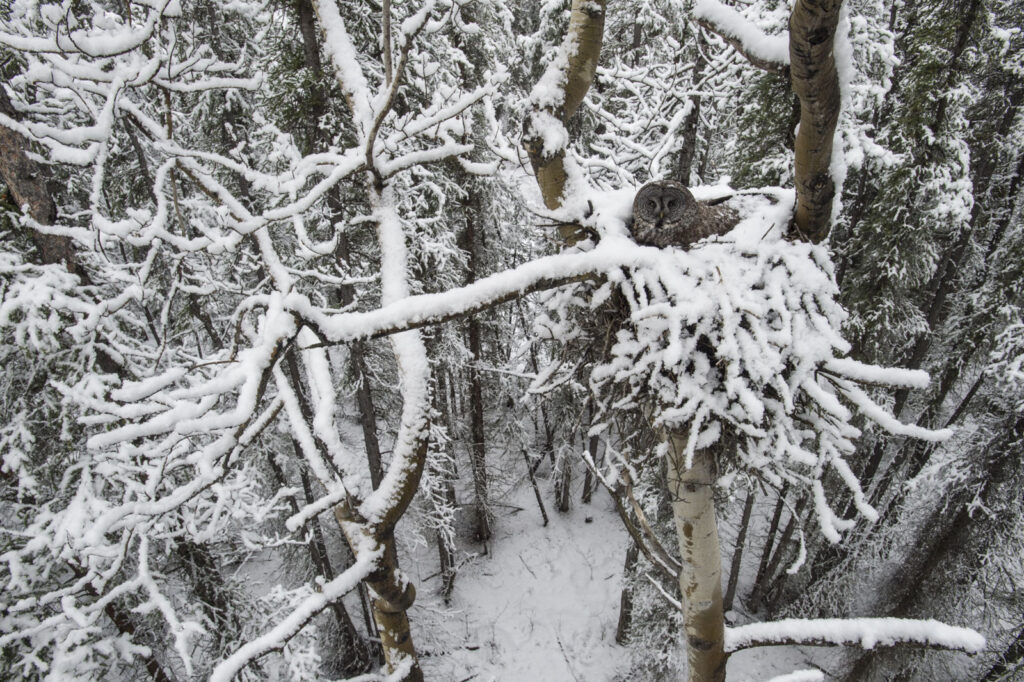
Owls do not build their own nests. Instead, they use a variety of natural structures, such as this one, built many years earlier by northern goshawks. I have been checking this big nest each spring for nearly thirty years. Northern goshawks have nested three times, great gray owls four times. The habitat is unique. Small islands of tall aspen and towering white spruce in a vast sea of stunted black spruce. Even though the goshawks don’t often nest here, they continue to maintain the nest, adding branches and boughs each spring and fall. One spring after heavy winter snows, the entire nest had crashed to the ground. Three months later, I was surprised to find it had been completely rebuilt.
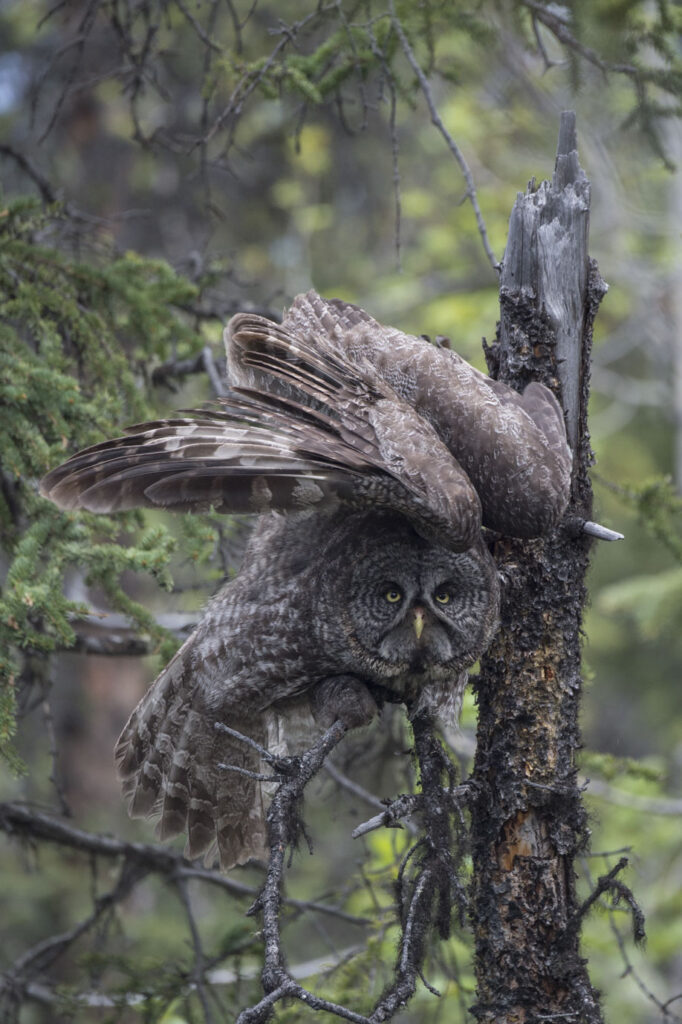
A few times a day, the female flies off the nest to drink, cast her pellet, feed, and perhaps stretch before returning to her incubation routine. But she is never off for long. She is concerned about the ravens and other forest predators.
Early one morning, not long after arriving, I heard a stick snap, then a huff and a snort. I looked down through a slit in the blind just as a grizzly bear sow and yearling cub passed below.
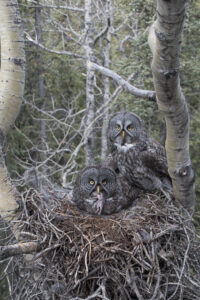
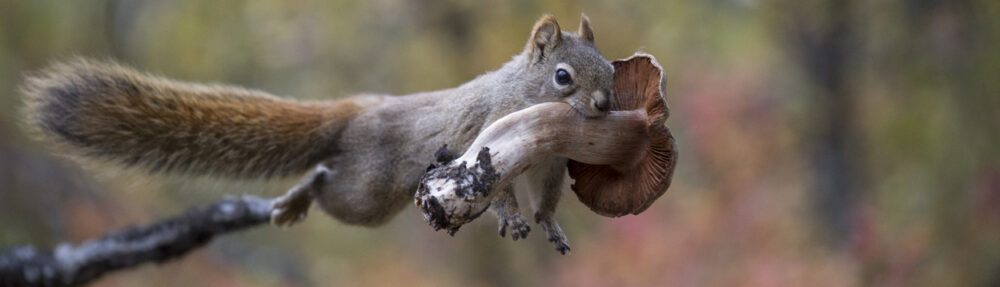
The male has just delivered prey to his mate. It’s a baby red squirrel. The male is an opportunist and preys on a variety of small birds and mammals up to the size of grouse and hares. Red-backed voles are their mainstay. Young red squirrels are probably raided from their grass and sphagnum nests in the spruce.
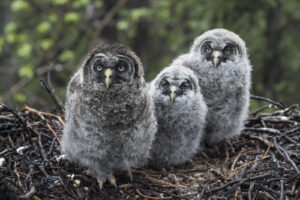
Watching the family grow, from my swaying photo blind in the forest canopy, is really living the high life.
GREAT GRAY FAMILY PHOTO OWLBUM