HOARDING TO SURVIVE

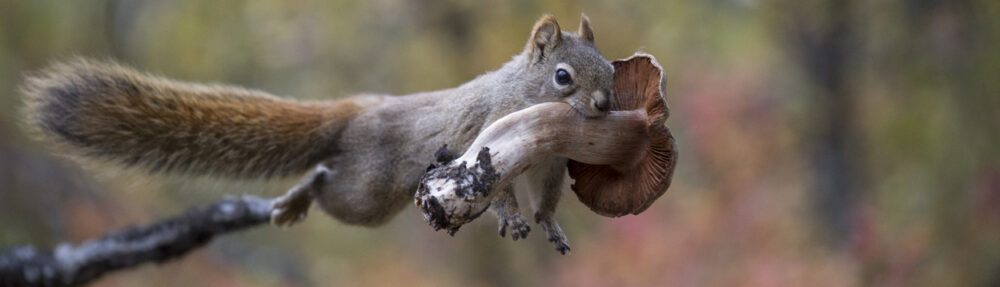
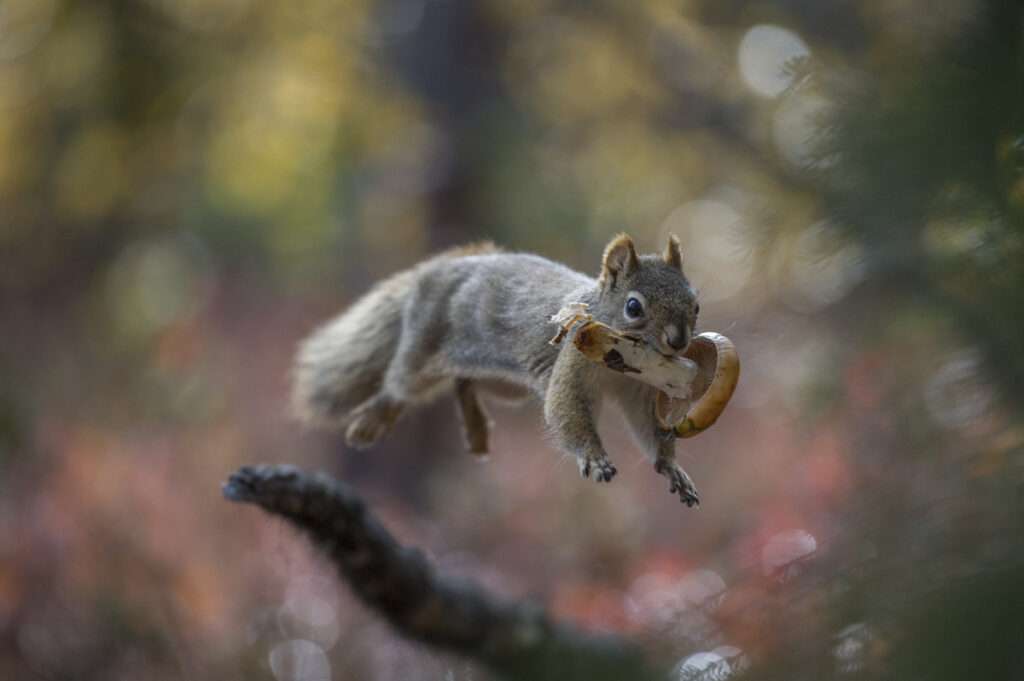
Red squirrel launches towards its mushroom cache.  Hoarding cones and mushrooms provides crucial survival benefits.
Read more: HOARDING TO SURVIVE

Red squirrels are naturally shy and cautious, ever alert for predators such as lynx and northern goshawks, specialists in hunting these tough rodents. Red squirrels can eat toxic mushrooms, including these. (Amanita muscaria)

Mushrooms are laid out on spruce boughs to dry, then cached in a cool, dry place. I found nearly ten gallons of dry mushrooms the red squirrel had cached in our sauna.


From a squirrel’s perspective, spruce cone production is not always something to chatter about. It can fail over huge areas, making mushrooms very important. But some squirrels have their pantries still bulging with cones buried last year in stashes around their territories.  Buried cones stay cool, moist, and tightly closed, their tiny seeds within.

Spruce cone clusters stashed at a squirrel midden.


PHOTO TIP

Hang out with them until they are quite used to your presence. (weeks to months) These photographs were taken near our wilderness home, where red squirrels can become somewhat trusting but very destructive.

Photographing red squirrels is fun but challenging.  I photographed the squirrels for more than a month to get these photographs. Sometimes the curious red squirrel is more interested in checking out my equipment than carrying on with its important work.

        A dried mushroom is the perfect snack on a cold winter day.

CARIBOU CROSSING

For two weeks, I’d waited along this frozen river in the hopes of photographing the semi-annual caribou migration.   Altogether, I saw about two hundred caribou, a mere trickle compared to some years.  One large group (above) had nearly 150 caribou, and the remaining stragglers were in pairs or small groups.  The bulk had passed to the west of here earlier.

Continue reading